

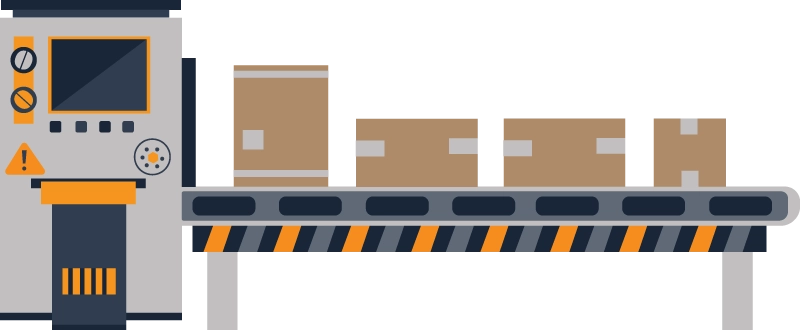
A conveyor belt is a continuous looped medium used in belt conveyor systems to transport goods, materials, or components from one point to another. The looped belt runs over pulleys (drums), with at least one pulley powered to move the belt and its load. Conveyor belts streamline material handling, reduce manual labor, boost efficiency, and support high-volume production across industries. Whether food product, electronics, packaging and processing, or any other operation moving goods, conveyor belt systems improve productivity.
How Conveyor Belts Work
- Belt: A flexible loop made from materials like rubber, fabric, plastic, metal, or leather, which carries logistical loads.
- Drive motor: The electric motor that drives the belt’s motion.
- Head & tail pulley: The front and back end of a conveyor system that the belt uses for tension and support.
- Frame and rollers: A support structure made of steel or aluminum, with rollers or idlers to maintain belt alignment and reduce drag.
- Motor & control system: Motors—often using variable-frequency drives—combine with controls (PLCs, sensors, VSDs) to regulate belt speed, direction, and automated integration into production lines.
Core Belt Construction
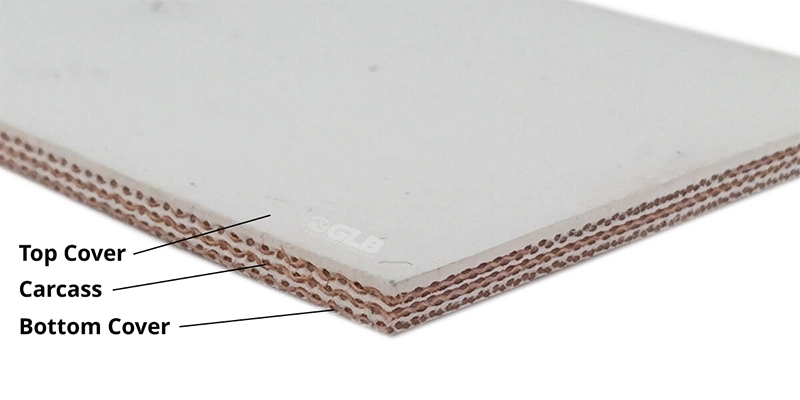
Most industrial belts are built in three essential layers:
- Top cover: Provides wear resistance, protection, grip, and chemical shielding. This allows the conveyor belt to safely carry whatever product or good that it needs without excess wear and tear.
- Carcass: The belt’s core strength, typically composed of woven fabric (polyester, nylon, cotton, aramid/Kevlar) or metal cords. This helps the belt keep its shape and tension while in use.
- Bottom cover: Protects against pulley friction, heat, and contaminants. As the part in touch with the pulley system, the bottom cover is built to resist wear from frequent use that causes it to rub against rollers.
Conveyor Belt Materials
Conveyor belts are tailored to specific job demands and environments:
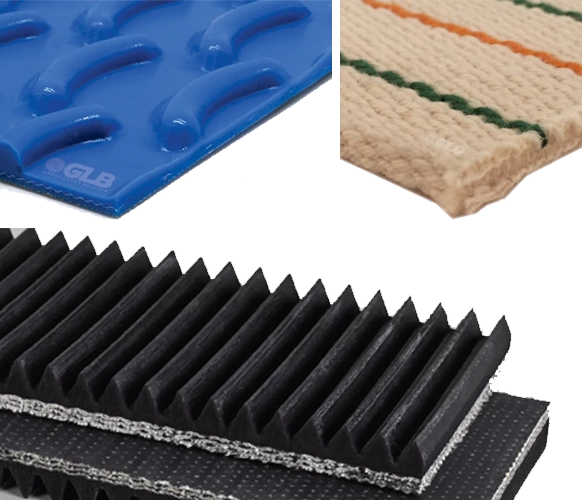
- Rubber (e.g. neoprene, nitrile, SBR): Durable and abrasion-resistant, rubber belts are reinforced with fabric for strength. Rubber belting typically works best in heavy-duty applications.
- Fabric (nylon, polyester, Kevlar, cotton): Flexible, cost-effective, and chemically resistant. Fabric offers a lightweight yet strong performance with customizable covers.
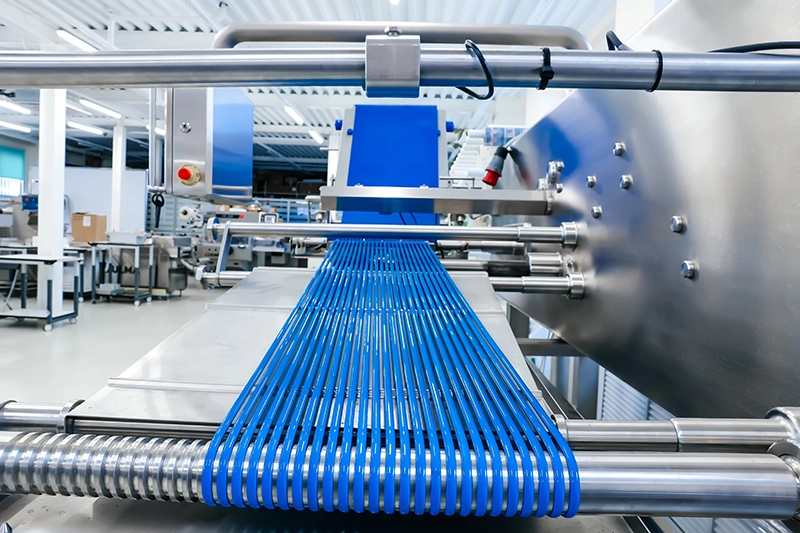
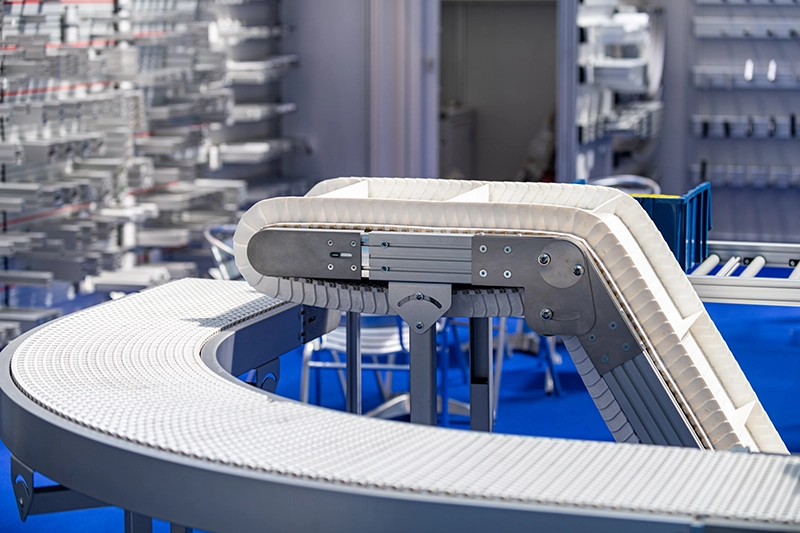
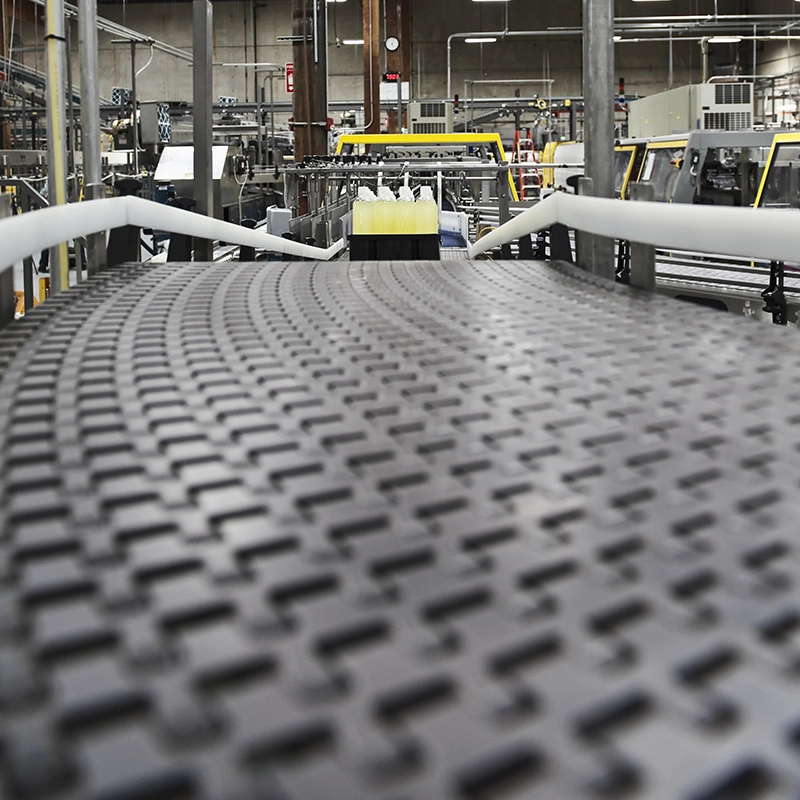
- Plastic/Modular (PU, PVC): Lightweight and easy to clean, these are typically used in environments that require a sterile belt, like food, pharma, or bottling. These belts are also often designed to navigate curves and inclines .
- Metal (stainless, carbon steel): Metal conveyor belts provide high durability and temperature resistance. These are best for heavy, continuous operation environments.
- Leather (traditional): Durable, with shock absorption and grip, rubber belts are typically used in specialty and hybrid builds.
What Are the Different Kinds of Conveyor Belts?
Common Conveyor Belt Types and Their Uses
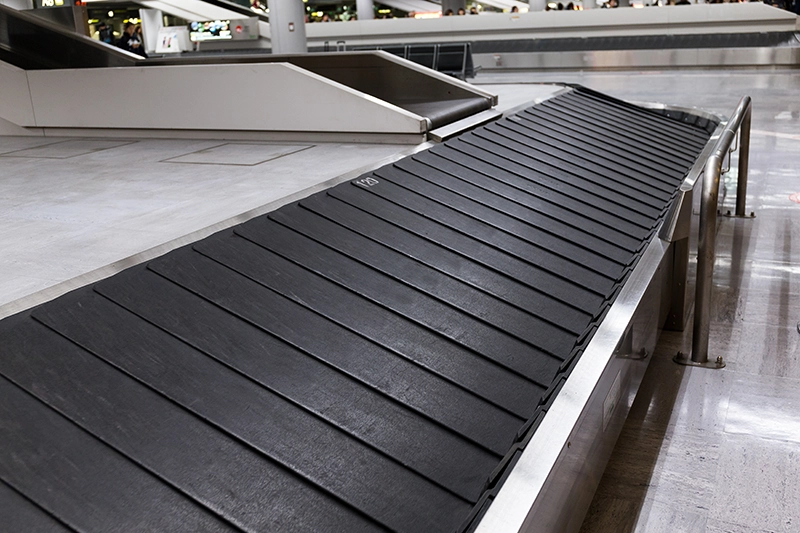
- Flat conveyor belts: What many think of as the “standard” for conveyor belts. These are ideal for packaging, warehouse systems, and production lines. They often serve a more general purpose in belting operations because they can handle diverse shapes and sizes.
- Modular/plastic conveyor belts: Sanitary, durable, and simple to repair, modular belts are constructed from easily-cleanable plastic sections. These belts offer a great option for industries requiring sanitary belting, such as food, beverage, or pharmaceuticals.
- Cleated conveyor belts: Cleated conveyors are constructed for inclines or declines. This is thanks to “cleats” that are installed along the belt, which functionally serve as separator, as well as a vertical divider that prevents rollback of product along the belt when moving up or down. These are often seen in agriculture, aggregate work, and more.
- Timing Belts: Timing belts are often smaller conveyor belts that provide performance synchronization and exact product placement. These belts typically have teeth on either one or both sides that allow them to precisely rotate around pulley systems and ensure exact movement throughout a production.
- Anti-Static Conveyor Belts: Crafted from extremely static resistant rubber or ESD-safe fabric, these conveyors work to minimize friction-induced static through dissipative materials. These work great for industries like electronics where the safety of the product being moved would otherwise be threatened by static discharge.
Selecting the Right Belt
Depending on what you’re moving, selecting the right conveyor belt makes all the difference. Some factors to consider when choosing the right belt for your conveyor lines include:
- Material type: Consider weight, abrasiveness, chemical exposure, and temperature range.
- Environment: Are food safety, outdoor exposure, heat, cold, or chemical resistance required?
- Speed & inclination: High throughput needs low-stretch, high-speed belts.
- Maintenance & repair: Modular designs offer easy section replacement; fabric belts offer quick splicing.
- Regulations: Food/pharma requirements for FDA approval, hygiene standards, or chemical resistance for meeting product safety standards.
Common Uses of Conveyor Belts
Although conveyor belts can serve a wide variety of purposes, there are some common uses that span across a wide range of industries. Some of the most common uses include:
- Material Handling: Whether small or large scale production, conveyors are often used for material handling of products, moving them from one part of production to another.
- Packaging & Processing: From moving initial component parts of products to the finalized, packaged goods that are moved into a loading bay, conveyor belts help packaging and processing operations every step of the way.
- Assembly Production: Assembly lines working with multiple component parts at a time or a single part being steadily assembled work best with the right conveyor belt moving everything steadily and dependably.
- Abrasive Material Transport: Whether aggregate excavation or construction material production, the transportation of heavy, abrasive materials gets handled more efficiently with a durable conveyor belt.
Although these are just some examples, conveyor belts are used on some level throughout a large variety of industries.
Regulations for Conveyor Belts
Some industries require conveyor belts to adhere to national regulations for moving specific types of products or materials. If you operate a production, it’s important to know whether it needs to follow these regulations and adhere to them properly. Federal regulations for conveyor belts and moving products include:
Food and Drug Administration (FDA)
Food Contact Material (FCM) guidelines encompass conveyor belts. These govern any equipment that comes into contact with food. These regulations are detailed in Title 21, Chapter 1, Sub-chapter B of the Code of Federal Regulations.

Mine Safety and Health Administration (MSHA)
Operating under the United States Department of Labor, MSHA regulations are specified in sections 56, 57, 75, and 77. These include surface and underground mining, coal mining, and non-metallic mining.
Occupational Safety and Health Administration (OSHA)
OSHA focuses on worker safety and health while on worksites. Section 1926.555 outlines their conveyor safety standards, which focus on general operational safety of conveyor belts such as safety stops, emergency stops, conveyor passes, and more.

Whatever your industry is moving, make sure you understand what regulations apply and that each is followed during daily operation.
Why Great Lakes Belting?
At Great Lakes Belting, we deliver tailored belt solutions backed by industry-leading materials, expert engineering, and top-tier support. Whether you’re in mining, manufacturing, food processing, packaging, or logistics, our systems are:
- Fully customized – Chosen to optimize your throughput, environment, and workflow
- Built to last – Both our lightweight and heavy-duty conveyors provide long-term use
- Easy to service – On-site support and service available as needed
- Compliant & safe – Meeting all necessary regulatory and safety standards
Partner with Great Lakes Belting to transform your material handling! With us, you can improve operations through effective conveyor belting solutions. From custom options to belts that meet and exceed industry standards, we’ll help you find a better way to move product and materials. Reach out to learn more or start on an order!