

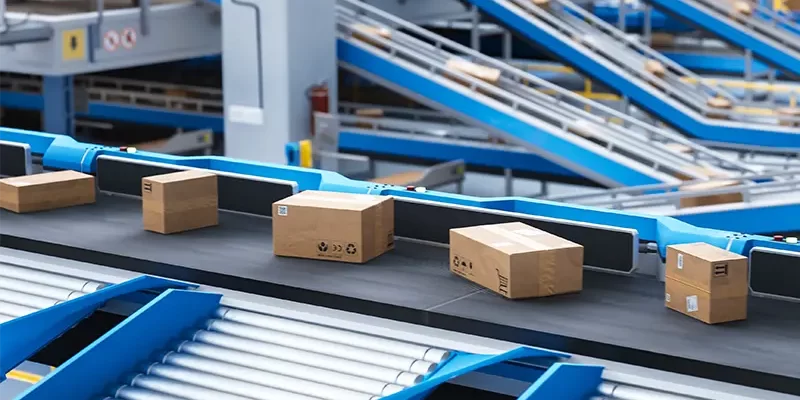
In America’s fast-paced logistics and eCommerce environment, package handling conveyors are the backbone of efficient operations. Whether in fulfillment centers, package hubs, or distribution warehouses, conveyor failures lead to costly downtime, delayed shipments, and frustrated customers. At Great Lakes Belting, we understand the importance of keeping your conveyor systems running smoothly. When a conveyor stops, the ripple effects are immediate: delayed shipments, overtime for staff, dissatisfied customers, and lost revenue. Let’s talk about how to avoid delays caused by a bad or broken belt.
Conveyor Maintenance Habits
One of the foundational steps in conveyor maintenance is to establish a consistent inspection schedule. Daily visual checks can catch early signs of trouble, such as frayed belts, loose fasteners, visible wear, or debris buildup. Weekly and monthly inspections should go deeper: check belt tension, verify pulley alignment, ensure rollers and idlers spin freely, and inspect bearings for heat or noise. According to industry standard guides, worn idlers, misaligned pulleys, and improper belt tracking lead to uneven wear, and replacing individual parts is far less costly than replacing entire units.
Where To Look For Belting Problems
Lubrication also plays a critical role in extending the lifetime of conveyor components. Bearings, rollers, shafts, gearboxes, and pulleys all require periodic lubrication to reduce friction, avoid overheating, and prevent accelerated failure. Using the correct type of lubricant, applying it properly, and maintaining a schedule are essential. Either neglect or over-lubrication both create problems: under-lubrication leads to friction, heat, and wear; and over-lubrication can attract dust or grime which accelerates damage. Industry experts recommend checking lubrication weekly or monthly depending on usage, and being especially vigilant in dusty or humid environments.
Belt alignment, tension, and tracking are another few points of failure. Belts that are misaligned will rub against side frames, drift to one side, fray at edges, or even derail. Improper tension can lead to belt slippage, increased strain on motors, or belt stretch beyond design limits.
What To Do To Prevent Belting Problems
Best practice includes checking belt tracking while the system is running (where safe), using alignment tools, adjusting take-up and tail pulleys, and making sure idlers and rollers are aligned and in good condition. Many premature belt failures stem from misalignment or tracking issues, according to industry reports.
A well-structured maintenance schedule broken into daily, weekly, monthly, and annual tasks can make all the difference. Daily tasks might include visual inspections, listening for unusual noises or vibration, checking for immediate safety issues. Weekly maintenance could cover lubrication, tension checks, cleaning scrapers and sensors. Monthly checks might involve detailed inspections of belts, rollers, pulleys, drive motors, and safety interlocks. Yearly, more comprehensive system reviews such as replacing worn components, assessing motor health, gearbox oil changes, and perhaps engaging external specialists for diagnostics or predictive maintenance are beneficial. However, these are just a handful of possible steps–the best plan is one you’ve made specifically for your belts, since no two setups are the same.
Thinking Below The Box
Effective maintenance of package handling conveyors is vital for uptime, cost control, workplace safety, and operational efficiency. By combining routine inspections, proper maintenance, and a quality belting partner, you’ll maximize the performance and lifespan of your conveyor systems. At Great Lakes Belting, we’re committed to supporting your maintenance efforts with products, expertise, and solutions designed for reliability. Reach out to our team today, and let us convey excellence through our experience.