
A modular conveyor belt is built from interlocking plastic modules joined by hinge rods and driven by sprockets instead of friction. Because the belt is assembled from small, replaceable sections, it tracks positively, resists wear, and can be repaired in minutes rather than replaced. That mix of durability, hygiene, and fast maintenance makes modular belting one of the most versatile choices on the plant floor, especially in food and beverage processing.
What Makes Modular Belting Different?
Fabric and rubber belts rely on tension and friction, so they can drift off-center and wear unevenly. Plastic modular belts are sprocket-driven, which delivers positive drive and tracking and virtually eliminates the mistracking that leads to belt damage. The key advantages include:
- Fast repairs: Swap individual modules or flights without complicated tools or long shutdowns.
- Corrosion and abrasion resistance: The all-plastic design stands up to washdowns, chemicals, and heavy wear.
- No metal contamination: A strong fit for lines protected by metal detectors.
- Built-in drainage: Surface styles range from 18% to 40% open area without sacrificing belt strength.
- Wide temperature range: FDA-approved materials operate from -90°F to 220°F.
- Visual contrast: Belt colors can be selected so product and foreign material stand out.
Use Case 1: Meat and Poultry Processing
Meat and poultry plants demand belts that survive aggressive sanitation every shift. Modular belts handle saw lines, boning and trim tables, bone conveyors, and box handling with ease. Integral flights keep product moving up incline conveyors, and the all-plastic construction pairs naturally with metal and bone detection stations and weigh scales.
Use Case 2: Fruit and Vegetable Washing and Sorting
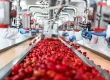
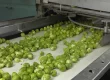
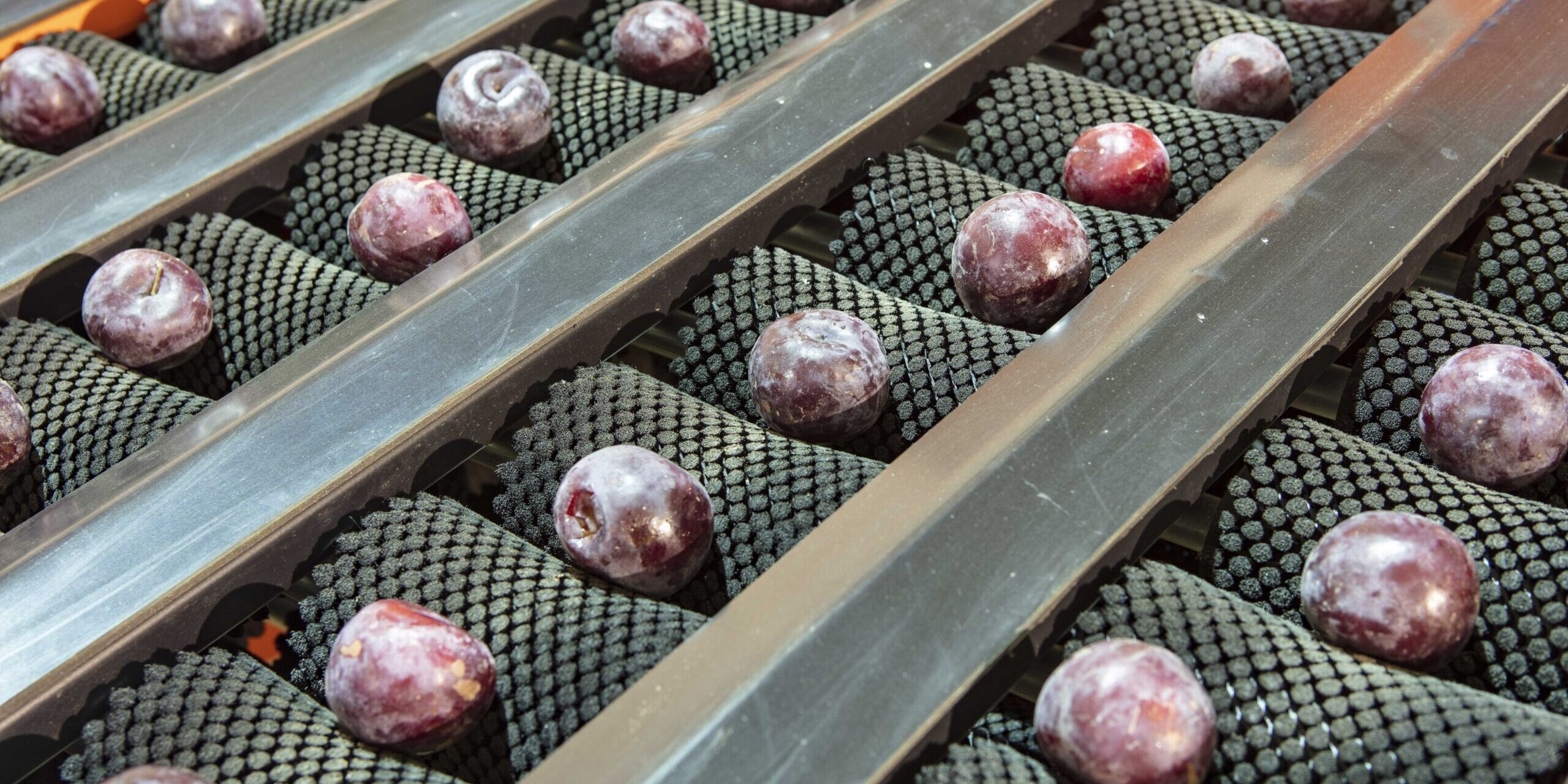
Produce lines move a lot of water. Open-area modular belts let wash water drain freely through primary and secondary wash stages, while flighted belts carry product up inclines and elevators. On grading and sorting lines, a contrasting belt color helps inspectors spot defects quickly. The same belts also run through coolers, sterilizers, and exhaust boxes thanks to their broad temperature tolerance.
Use Case 3: Bakery and Confectionery Production
From hearth bread, buns, and flatbread to puff pastry, biscuits, and extruded snacks, bakeries need belts that keep high volumes moving with minimal downtime. Confectioners rely on modular belting for chocolate bars, molded chocolates, chewing gum, and hard and soft candy. When a module is damaged, crews replace that one section and get the line running again, protecting output during peak production.
Use Case 4: Beverage, Dairy, and Brewery Lines
Dairies and breweries operate in wet, high-sanitation environments where corrosion quickly shortens the life of metal components. Modular plastic belts and chains handle container conveying reliably, and radius chains carry bottles and cans smoothly around curves to fit tight plant layouts. Great Lakes Belting supplies both radius and straight chains along with matching sprockets.
How Do You Choose the Right Modular Belt?
Start with the product, the environment, and the conveyor layout. Consider how much drainage the application needs, whether product must climb an incline, what temperatures the belt will see, and whether the line includes turns. Belt pitch, material, surface style, and accessories such as flights and side guards all affect performance. Our Find Your Belt tool is a good starting point, and our design and engineering team can match your application to proven products from leading manufacturers such as Intralox, Habasit, Uni Chains, and Rexnord.
Talk to a Modular Belting Specialist Today
Whether you are upgrading a single conveyor or planning a new processing line, Great Lakes Belting can help you choose, fabricate, and install the right modular belt. Call us at 1-800-545-2358, contact our team, or request a quote to get started. You can also request a sample and see the difference modular belting makes on your line.